
Robotic Commercial Cleaning Costs Explained for New Zealand
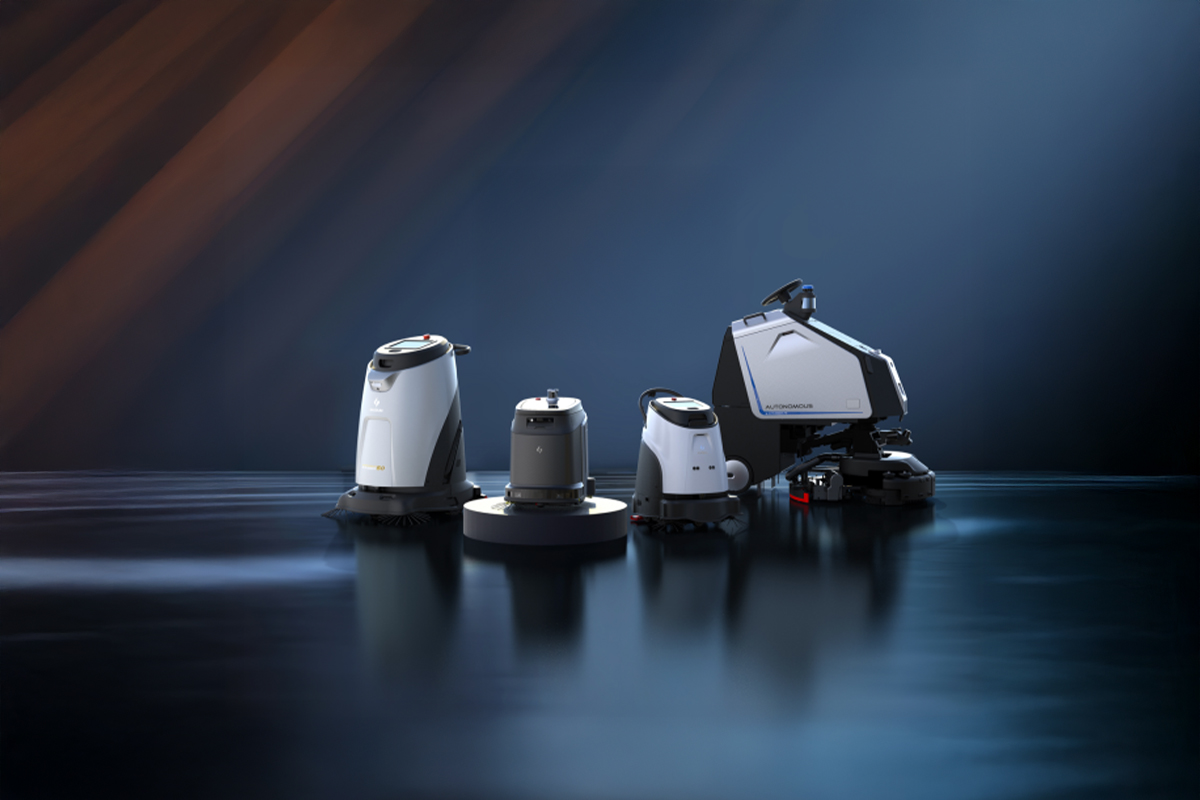
Autonomous floor cleaning is becoming more common across large-scale facilities in New Zealand, particularly in sectors where floor area, consistency, and labour availability are ongoing challenges. Warehousing, logistics, retail, and manufacturing environments are typically the earliest adopters.
The benefit isn’t that robotic cleaning replaces cleaning teams, it removes the repetitive floor-cleaning workload so staff or contractors can focus on the work that still needs human attention: offices, bathrooms, edges and corners, touchpoints, detailing, and sanitation.
Based on local market research, New Zealand commercial cleaning labour rates are typically around $40-$60 per hour (excl. GST).
https://sparkleforyou.co.nz/how-much-does-commercial-cleaning-cost-in-new-zealand/
https://www.cleanplanetwellington.co.nz/commercial-cleaning-prices-wellington-2026
https://serviipro.co.nz/cost-commerical-cleaning-auckland/
A Gausium robotic cleaner on lease costs between $17–$50 per day (excl. GST) .
Where you Save the Most
The main saving is in floor cleaning labour. Robotic cleaning doesn’t reduce the staff/contractors hourly rate, it reduces the hours required for routine floor work, particularly across large open areas where floor cleaning takes up most of the shift.
This shifts the cost model. Instead of cleaning costs scaling directly with labour hours, a portion of the work becomes a predictable daily operating cost. Businesses can then either reduce total cleaning hours or reallocate them to higher-value tasks elsewhere on site.
How We’ve Estimated the Savings
Before estimating savings, it helps to break the result down into its drivers. Robotic cleaning isn’t a one-for-one swap with traditional contract cleaning, so each of these inputs matters:
- Cleaning labour hours – time currently spent by staff or contractors.
- Floor cleaning share – what portion of the overall job is floor cleaning.
- Floor area cleaned – the size of the floor area that needs regular cleaning.
- Frequency of clean – daily, every second day, multiple times per day, or weekly.
- Robotic lease cost – the daily lease cost of the robot over a 5-year term.
- Labour cost – staff or contractor cost estimate
The figures used in the rest of this guide are intended as a conservative planning estimate. We’ve kept the numbers on the cautious side rather than the optimistic side, so a real-world result is more likely to meet or exceed them than fall short.
Comparing Productivity
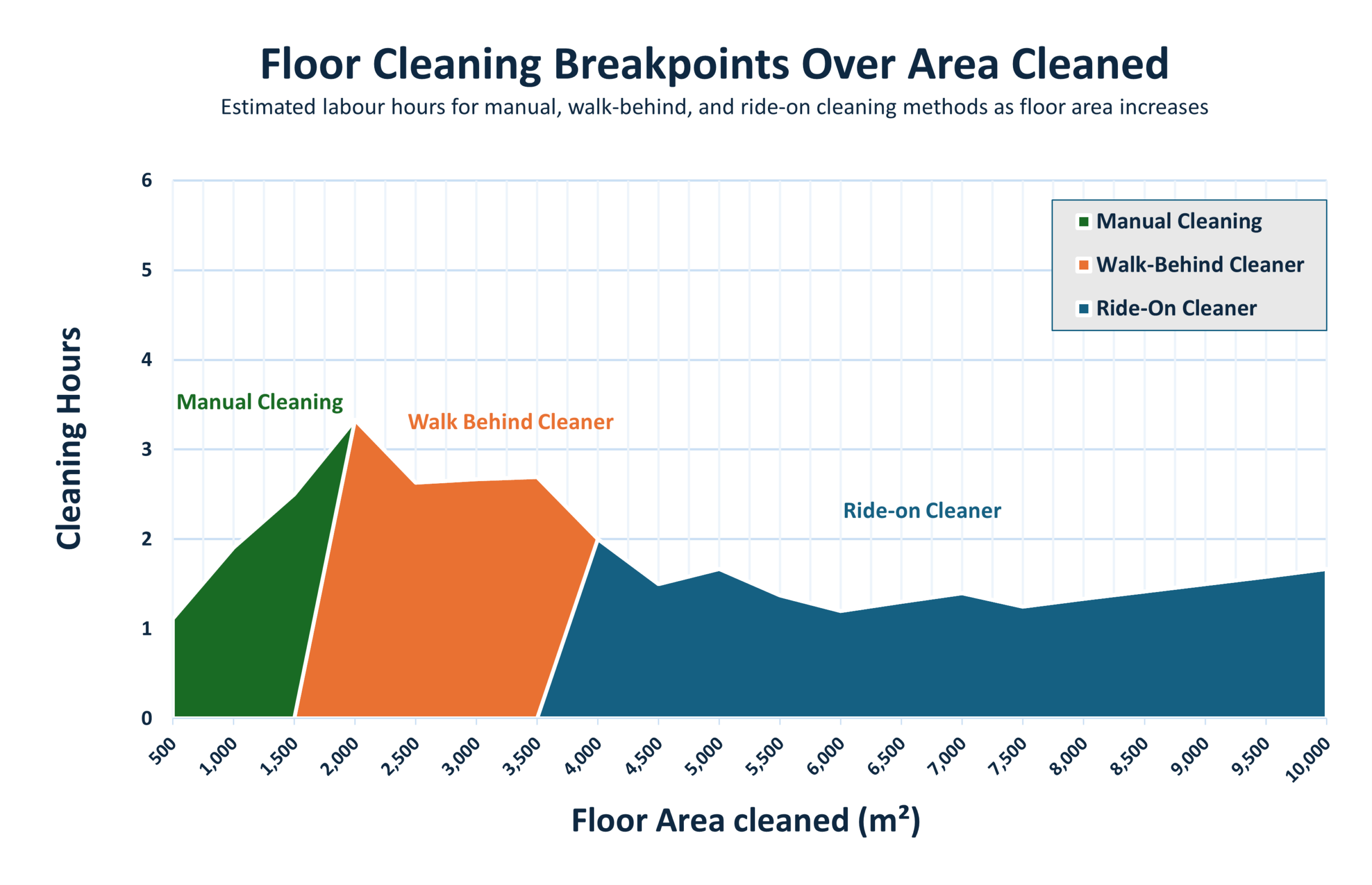
A core part of the savings calculation is comparing how much floor area can be cleaned manually vs how much can be cleaned by a robot. Productivity below is based on average unobstructed cleaning rates. Real-world productivity will vary with method, layout, obstacles, and site conditions.
Manual Cleaning Productivity Guide
Ranges below are based on industry cleaning-time guidance and should be treated as practical estimating ranges, not guaranteed production rates. See ISSA Cleaning Times .
| Cleaning Method | Typical Use Case | Productivity Range |
|---|---|---|
| Manual floor cleaning (vacuum / mop | Office space, smaller sites | 300–600 m²/hr |
| Walk-behind / hand-guided scrubber | Retail, supermarket, medium facilities | 600–1,300 m²/hr |
| Ride-on floor scrubber/sweepers | Warehouses, logistics, manufacturing | 2,000–6,000 m²/hr |
As cleaning area increases, higher-productivity equipment becomes more practical and cost-effective. Manual methods suit smaller spaces; larger areas justify walk-behind and then ride-on machines to reduce labour hours.
Robotic Cleaning Productivity Guide
The table below provides practical output ranges for gausium robotic cleaning models. These figures help estimate which robot is suitable for the size and type of floor area being cleaned.
| Model | Typical Use Case | Practical Range |
|---|---|---|
| Phantas — compact scrubber/vacuum | Office space, mixed floor environments, smaller sites | 350–700 m²/hr |
| Scrubber 50 — mid-size scrubber | Retail, supermarket, medium facilities | 500–1,300 m²/hr |
| Vacuum 40 — dry vacuum | Carpet, mixed floor environments | 1,000–1,500 m²/hr |
| Beetle — dry sweeper | Warehouses, logistics, manufacturing | 1,500–2,000 m²/hr |
| Scrubber 75 — large scrubber | Industrial, large-scale facilities | 1,500–2,500 m²/hr |
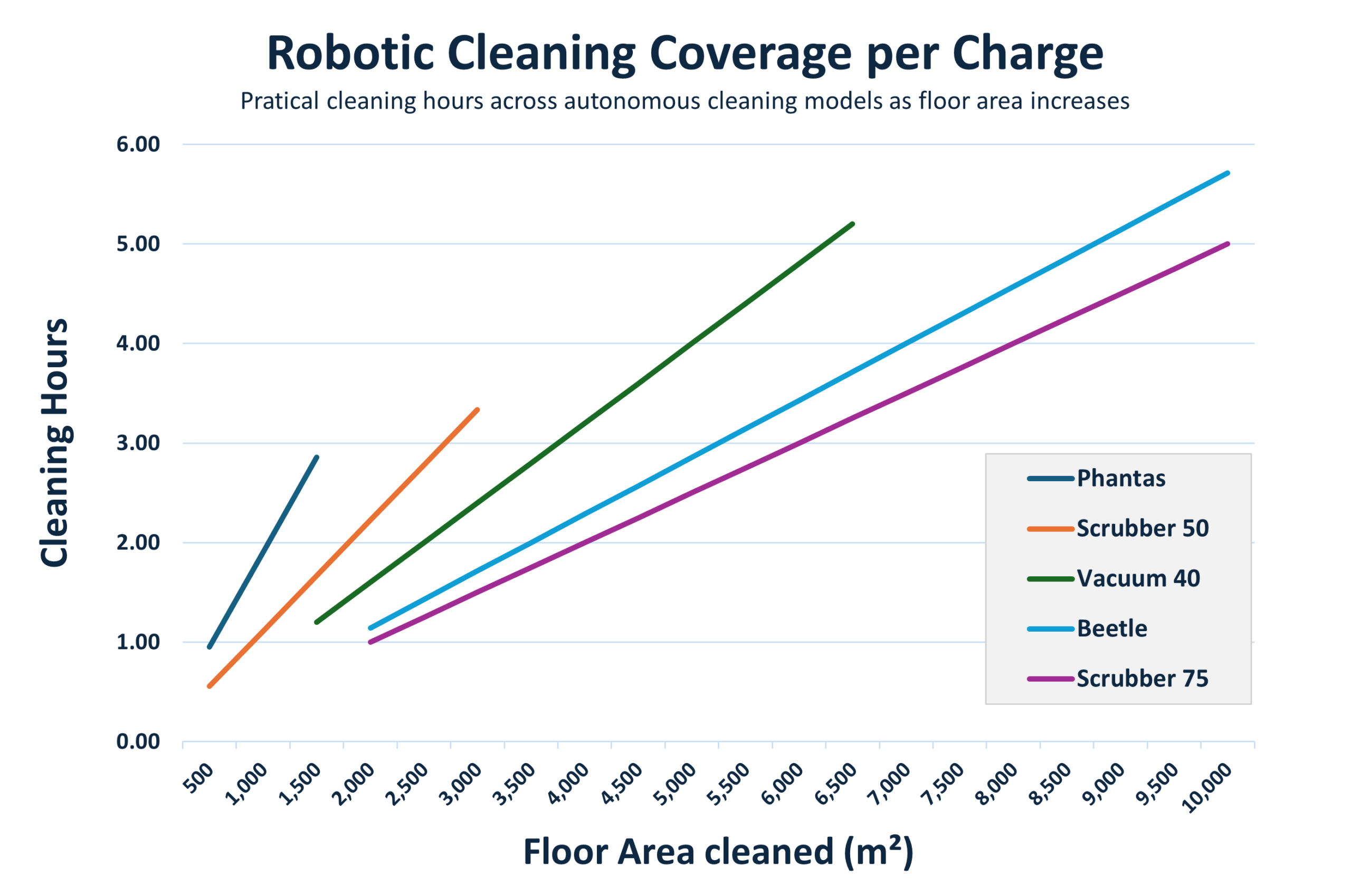
Choosing the right robot is less about picking the biggest machine and more about matching the robot to the site, surface type, cleaning frequency, and practical coverage required.
The chart below provides a practical guide to how different robotic cleaning models fit across increasing floor areas.
Fixed Cost Robotic Pricing vs Labour-Based Cleaning
In a traditional cleaning schedule, more frequency = more labour hours = higher cost, and sometimes additional equipment such as walk-behind or ride-on scrubbers.
With a leased robot, the fixed lease becomes the main cost and frequency is no longer the primary cost driver. Labour is still required for supervision, setup, maintenance, filling, and emptying but not for operating the machine across the full cleaning period.
Worth noting up front: this is a comparison of labour cost (staff or contractor cost estimate) versus robot lease, not total cost versus total cost. There are additonal OPEX factors on both sides, so this comparison isolates the core operating comparison first.
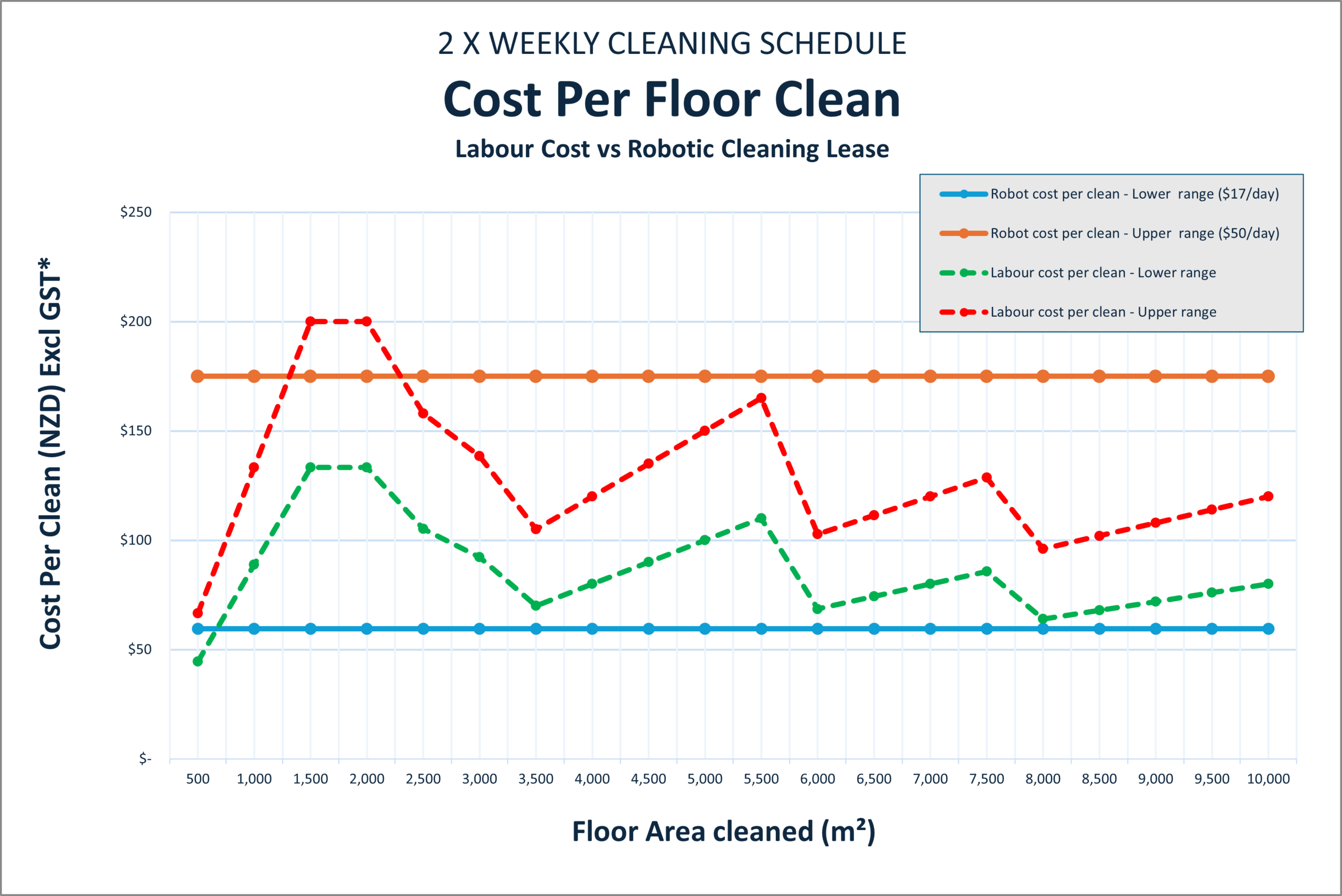
If we look at the chart, there is a clear case for robotic cleaners in the 1,000–2,500 m² range. Above 4,000 m², the direct cost saving can appear less obvious on a twice-weekly view. The strongest robotic advantage emerges when cleaning frequency increases particularly with daily or every-second-day schedules, this is where labour costs scale rapidly while robotic lease costs remain fixed.
The real saving is in frequency
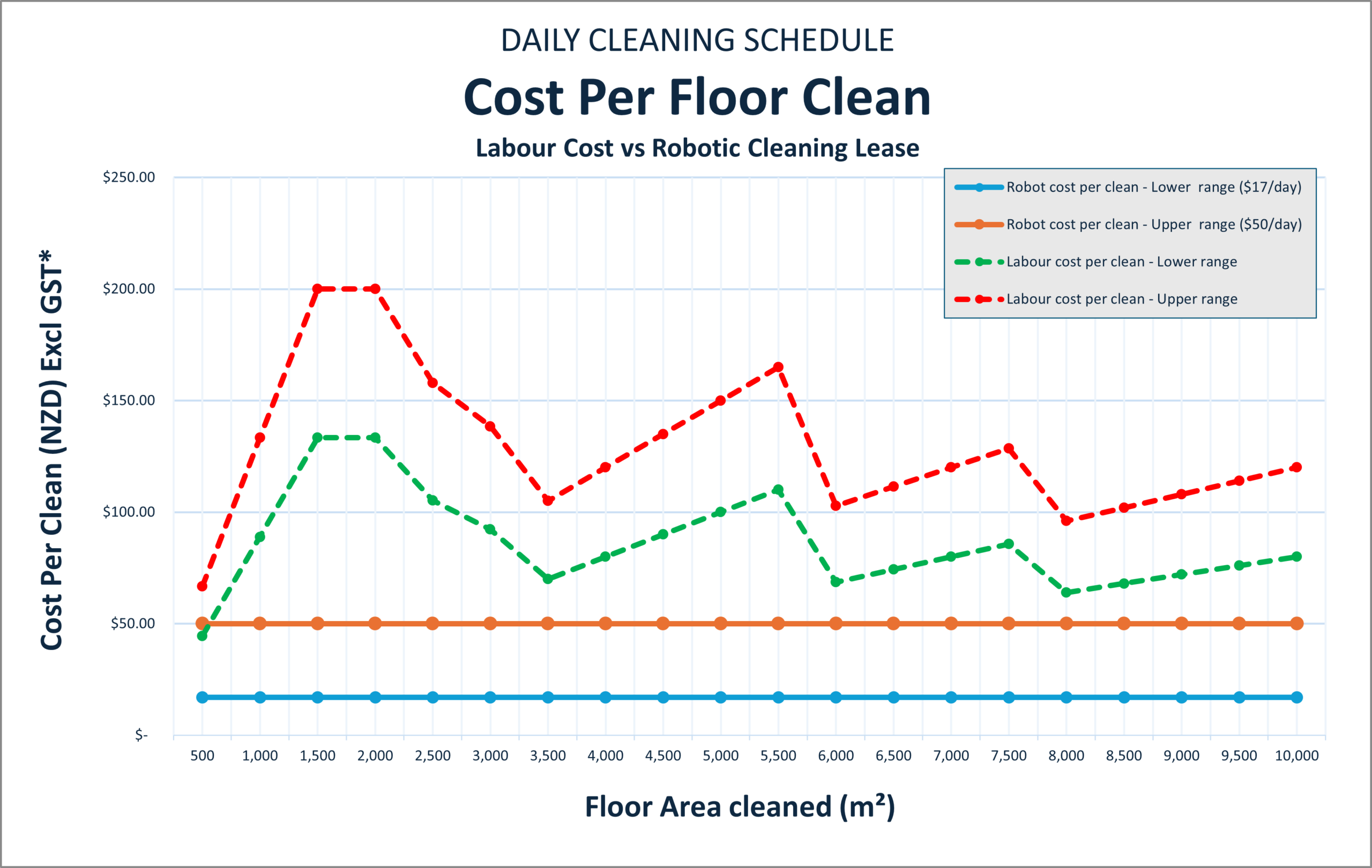
This is also why the strongest cases for autonomous cleaning sit in environments that are already cleaning daily or every second day. Warehouses and distribution centres are usually the clearest example: routine cleaning is concentrated on large open floor areas, so if a contractor or staff member is currently using a manual scrubber for that work, a robotic cleaner can replace that scheduled component almost entirely. Retail, office, healthcare, education, and hospitality tend to be supplementary use cases: the robot takes over repeat floor cleaning so cleaners can focus on the work that still needs human attention. The result is a more consistent clean, better use of labour, and a higher-quality service overall.
Floor Cleaning Savings as a Share of the Job
Robotic cleaning replaces the floor-cleaning portion of a contract, not the whole contract. How much of a saving that translates into depends on how much of the existing job is actually floor work.
| Environment | Est Floor Cleaning Share | Impact |
|---|---|---|
| Warehouse / Logistics | 60–100% | 50–80% reduction |
| Retail / Supermarket | 40–65% | 15–35% reduction |
| Office / Commercial | 25–50% | 10–25% reduction |
| Hospitality / Healthcare / Education | 20–40% | 10–25% reduction |
Floor-cleaning share should be treated as a planning range. The actual percentage depends on site layout, contract scope, cleaning frequency, bathroom count, staff areas, and whether the existing service already uses a manual scrubber.
As a worked example, a 4,000 m² warehouse cleaned daily with an 80% floor share and the contract midpoint of $50/hr has a floor-cleaning cost of around $3,044 per month (2 hours per clean × $50 × 30.44 cleans). A robot lease at the $45/day midpoint costs about $1,370 per month, leaving an estimated saving of around $1,674 per month, or roughly a saving of $20,100 per year on the floor-cleaning component alone. Total contract reduction sits closer to 44% once the non-floor work the robot doesn’t touch is included (saving ÷ estimated total routine contract, where total routine ≈ floor cost ÷ 80%).
What’s NOT in these numbers
The comparisons in this guide are between labour cost (hours × hourly rate) and a robot lease. They deliberately leave out the operating costs that sit on both sides: manual scrubber lease, chemicals, water, supervision and overheads on the labour side; consumables, electricity, software, and a small amount of supervision time on the robot side. Realistic loaded labour cost typically runs 20–40% above the bare hourly rate, while loaded robot cost runs 5–15% above the lease. Both sides go up when fully costed, but labour goes up by more, so the real-world picture is slightly more favourable to the robot than the numbers in this guide suggest. We’ve kept the figures on the unloaded basis to stay conservative on our side and keep the comparison easy to follow.Where Robotic Cleaners Deliver the Most Value
Consistency and Operational Control
One of the primary differences between robotic and manual cleaning is consistency.
Manual cleaning output can vary depending on the operator, time of day, and workload. In contrast, robotic systems follow predefined routes and parameters, resulting in a repeatable cleaning pattern across each cycle. This is particularly relevant in facilities require presentation standards or dust control.
Modern systems use LiDAR and camera-based navigation to map environments and avoid obstacles. Once mapped, the robot can operate with minimal supervision, returning to charge automatically and resuming tasks where required.
Workload and Operating Capacity
The workload of an autonomous cleaning robot is primarily defined by its coverage rate, runtime, and ability to operate across multiple cleaning cycles with minimal intervention.
For mid-sized and large autonomous scrubbers, operating capacity typically includes:
- Coverage rates in the range of 2,500–3,700 m² per hour depending on model and cleaning mode
- Runtime of 2–6 hours per charge, influenced by floor conditions and task intensity
- Recharge times of 2–5 hours, with support for automatic docking
Most systems are designed to return to a docking station, recharge, and resume cleaning automatically. This allows the robot to operate continuously across multiple cycles, enabling near 24/7 operation where required, particularly in large facilities or low-traffic periods.
Navigation and workload efficiency are also influenced by the robot’s ability to manage real-world environments. Using LiDAR and vision-based sensors, the machine can detect obstacles such as shelving, pallets, or pedestrian movement, adjust its path, and continue cleaning without stopping. This reduces downtime and helps maintain consistent area coverage even in partially obstructed spaces.
In larger facilities, workload is less about a single continuous run and more about total daily coverage. A robot may complete several cleaning cycles across different zones, with overall output determined by:
- Total operating hours
- Site layout
- Cleaning frequency
As a result, different robot models are typically selected based on the size of the area, required coverage rate, and expected daily workload.
The following table outlines the typical workload and operating capacity across our robotic cleaning models.
|
Model |
Cleaning Type |
Typical Use Case |
Coverage Rate |
Runtime |
Charging Time |
|
|---|---|---|---|---|---|---|
|
Dry Sweeper |
Warehouses, logistics, manufacturing |
Up to ~3,000–3,700 m²/hr |
~4–8 hours |
~2–3 hours |
||
|
Mid-size Scrubber |
Retail, supermarket, medium facilities |
Up to ~1,300–2,000 m²/hr |
~3 hours (scrubbing) |
~2 hours |
||
|
Large Scrubber |
Industrial, large-scale facilities |
Up to ~3,000 m²/hr |
~4–6 hours |
~4–5 hours |
||
|
Vacuum (Dry) |
Carpet, mixed floor environments |
~1,000–1,500 m²/hr |
~3–6 hours |
~2–3 hours |
||
|
Compact Scrubber/Vacuum |
Office space, smaller sites |
350-700 m²/h |
~2–4 hours |
~2–3 hours |
Practical Site Requirements of a Robot
A robotic cleaner needs a clear charging or docking location with power and enough room to align correctly. Day-to-day care is usually limited to short routine tasks such as emptying bags, managing tanks, and checking brushes.
Mid-size and large Gausium scrubbers can also be set up with auto-fill and auto-empty docking, which reduces manual handling compared with smaller units. Layout changes can usually be managed by the robot on the fly, although major permanent changes may require a map refresh. Mapping and daily schedules can be managed by Gausium or by your own team, depending on how you prefer to operate.
Gausium equipment can be compatible with many lifts and some automatic door systems, but access depends on the building. This is best confirmed through a short site conversation rather than relying on a brochure.
Next Steps
Want a tailored estimate for your site? Share your floor area, cleaning frequency, and current cleaning hours, cleaning costs, and we’ll model the potential saving against the most suitable Gausium model.
From there, we can arrange a site demo so you can see the robot operating in your own environment. If it is the right fit, the next step is installation, mapping, setup, and training so your team can start using the robot on site.